Knowledge Diplomacy for a Changing Europe
On 30 January, the International Institute for Asian Studies (IIAS) hosted a high-level policy roundtable entitled “Repositioning Europe’s Knowledge Collaboration with the Global South in a Fast-Changing World.” Following two large international Conference-Festivals or ConFests – the International Convention of Asia Scholars (ICAS13) held in Surabaya in 2024 and the Africa-Asia Conference 3 held in Dakar in 2025 – the event marked a deliberate “return to Europe” for IIAS.
The aim was to articulate more clearly, to a European audience and network of partners, the role the institute plays and how its diverse activities contribute to Europe’s knowledge diplomacy – particularly in relation to the Global South. At a moment when the European Union and its member states are being called upon to develop more innovative and autonomous global strategies, the roundtable highlighted IIAS’s longstanding commitment to a South–South–Europe approach, framed here as an active form of South–South–North knowledge diplomacy.
The event brought to Leiden the Vice-President of the European Parliament, Younous Omarjee, a longstanding supporter of the institute. The discussion gathered representatives from numerous Dutch academic, civic, and policy organizations engaged with the Global South. It was an honour for me to co-chair the roundtable alongside our new IIAS Board Member and Leiden University Medical Center faculty member, Prof. Abena Amoah.
Building on two recent policy reports from the Netherlands and Germany calling for a fundamental rethinking of Europe’s engagement with the Global South, the roundtable brought together university leaders, researchers, parliamentarians, and representatives of knowledge institutions. Participants explored how demographic shifts, geopolitical realignments, and rapid technological developments are reshaping global knowledge exchanges. A shared view emerged: Europe must move beyond transactional relationships and instead foster more horizontal, long-term intellectual partnerships with institutions in the Global South as a central pillar of its external policy.
Three key questions framed the discussion. First, how can Europe move beyond traditional North–South frameworks toward genuinely reciprocal, trust-based partnerships? Second, how can the strategic value of knowledge collaboration be articulated in an increasingly multipolar and uncertain world? Third, what forms of support do knowledge institutions require from the EU and national governments to advance knowledge diplomacy? The reflections below synthesize the main insights from the roundtable and consider how IIAS’s work anticipates many of these priorities.
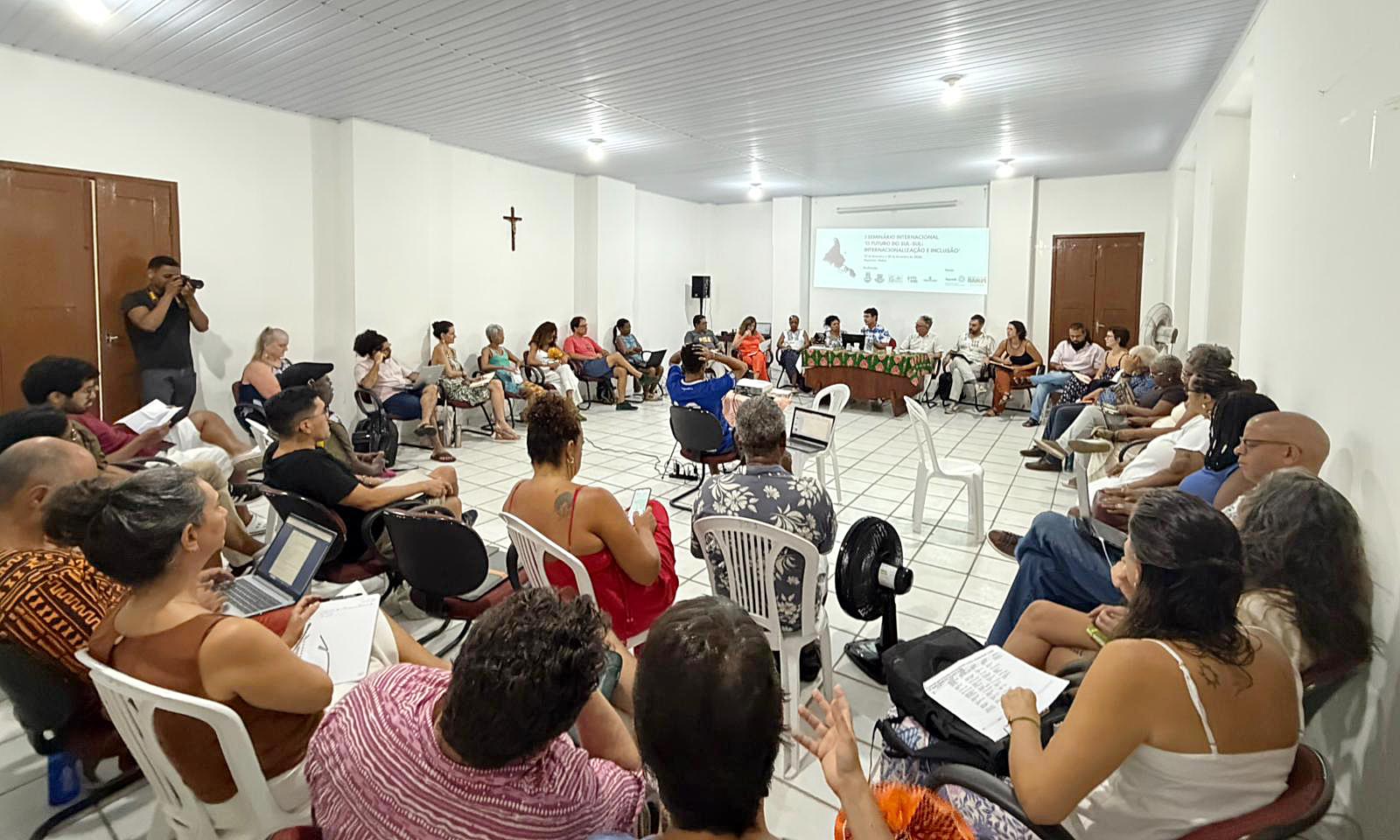
Fig. 2: IIAS Director Philippe Peycam participates in the international seminar O Futuro do Sul-Sul on the future of South-South collaboration, convened in Bahia, Brazil, February 2026. (Photo courtesy of Laura Erber, 2026)
Participants expressed a strong conviction that Europe’s future depends on its ability to build more equitable, multi-centred knowledge partnerships with the Global South. Achieving this requires moving beyond transactional models and embracing knowledge diplomacy grounded in reciprocity, trust, and long-term engagement. Key priorities identified by roundtable participants included simpler funding mechanisms, more inclusive mobility policies, curriculum transformation, and stronger institutional support for collaborative networks. Participants also stressed the importance of local anchoring to ensure that collaborations resonate with communities and avoid reproducing historical hierarchies. The roundtable concluded with a shared commitment to continue the dialogue – among European actors and with their southern partners – in order to develop a renewed architecture of knowledge collaboration capable of addressing the challenges of a rapidly changing world.
From the perspective of IIAS, the roundtable marked an important moment of renewed visibility within Dutch and European academic and policy landscapes. It also reaffirmed the institute’s role as a unique platform for pioneering collaborative mechanisms that connect knowledge actors across regions and continents. Unlike traditional think tanks focused primarily on advising states or corporations, IIAS seeks to build dynamic frameworks of exchange across sectors and societies to help shape new knowledge.
Over the past three decades, the institute has invested in building durable platforms that are collaborative, multi-stakeholder, trans-sectoral, and interregional. Through innovative grants from forward-looking funding organizations, through network-based academic–civic programmes such as Humanities Across Borders, the Urban Knowledge Network Asia, the River Cities Network, and Africa-Asia: A New Axis of Knowledge, as well as through capacity-building initiatives with partner institutions in the Global South, IIAS continues to explore new pathways for collaborative knowledge generation.
Today, the institute’s Asia in the World itinerant fellowship programme, its locally embedded yet globally connected ConFests, its in situ participatory policy and educational engagements, and its multi-vocal dissemination formats all contribute to a broader vision: advancing a renewed, multi-centred strategy for international knowledge circulation and collaboration.
In this vision – echoing the work long advocated by the German philosopher and sociologist Jürgen Habermas, who recently passed away – universities and higher education institutions are not only sites of research and teaching but also civic and diplomatic actors. They are capable of fostering rational dialogue, building trust, and contributing to the reinvention of Europe’s role in a post-hegemonic global order.
In recent months, IIAS’s work has gained further recognition through expanded international engagements, including visits to partners in East Asia and Brazil. In these contexts, the institute’s approach – promoting inclusive, multilateral interdependence grounded in the circulation of knowledge – has been increasingly acknowledged, along with the distinctive facilitating role IIAS can play through its unique formats of activity in connecting institutions and networks across regions.
Philippe Peycam is Director at IIAS. Email: p.m.f.peycam@iias.nl